

Table of Contents
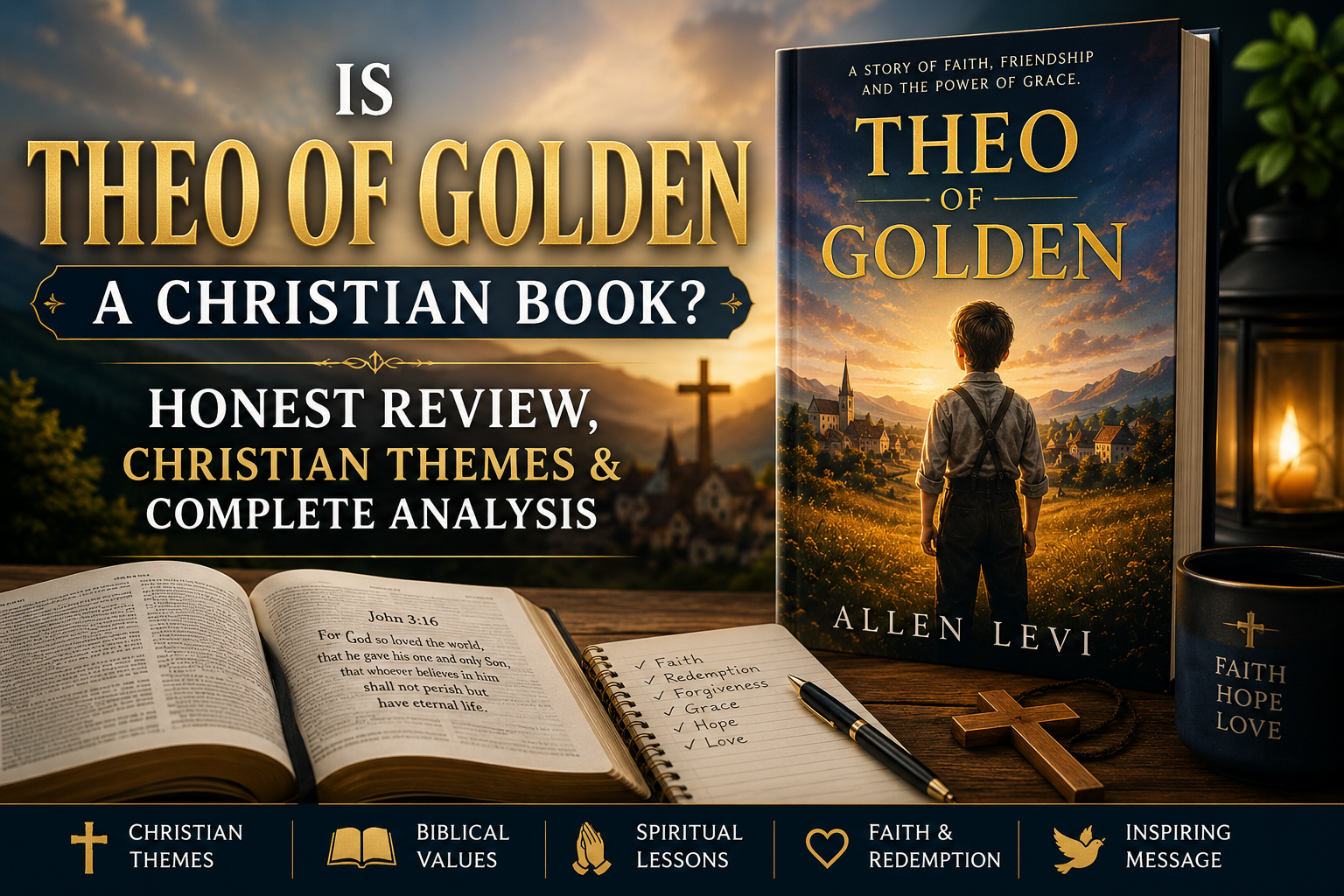
Quick Answer: Is Theo of Golden a Christian Book?
What Is Theo of Golden About?
Who Is Allen Levi?
Is Theo of Golden Officially Christian Fiction?
Christian Themes Found Throughout the Novel
Is Theo a Christ Figure?
Biblical Symbolism Explained
Literary Style and Spiritual Depth
Should Christians Read Theo of Golden?
Who Will Enjoy This Book?
Pros and Cons
Books Similar to Theo of Golden
Final Verdict
Frequently Asked Questions
Quick Answer: Is Theo of Golden a Christian Book?
Yes—but not in the traditional sense. Theo of Golden is a novel that reflects many Christian values and biblical themes without functioning as a sermon or devotional. Instead of openly preaching Scripture, author Allen Levi tells a thoughtful story about grace, forgiveness, hope, compassion, sacrifice, and redemption through memorable characters and meaningful relationships.
Readers looking for a faith-filled novel that encourages reflection rather than direct teaching often describe Theo of Golden as one of those rare books that quietly points toward Christian truth through storytelling. Although it is not marketed as a conventional Christian novel, its message strongly aligns with a biblical worldview.
If your question is, “Is Theo of Golden a Christian book?” the best answer is this:
It is a literary novel deeply influenced by Christian values, making it an excellent choice for readers who enjoy inspirational fiction with spiritual depth.
Introduction
Is Theo of Golden a Christian book? This is one of the most common questions readers ask before picking up Allen Levi’s acclaimed novel. Some readers discover the book through book clubs, while others hear about its emotional storytelling and wonder whether it belongs on a Christian reading list.
The answer isn’t simply “yes” or “no.” Theo of Golden occupies a unique space between literary fiction and faith-inspired storytelling. It doesn’t rely on lengthy Bible quotations, overt preaching, or dramatic conversion scenes. Instead, it communicates timeless Christian truths through the life of a mysterious and compassionate man whose quiet influence transforms everyone around him.
That subtle approach is exactly what makes the novel stand out. Rather than telling readers what to believe, Allen Levi invites them to witness grace in action. Themes such as forgiveness, humility, self-sacrifice, unconditional love, and redemption unfold naturally through the characters’ choices and relationships. For many readers, these qualities echo the life and teachings of Jesus Christ, leading to ongoing discussions about whether Theo represents a symbolic Christ figure.
This article provides a complete, balanced answer to the question “Is Theo of Golden a Christian book?” We’ll examine the novel’s themes, symbolism, biblical connections, literary style, and intended audience. We’ll also explain why some readers classify it as Christian fiction while others see it as inspirational literary fiction that appeals to believers and non-believers alike.
Whether you’re choosing your next read, leading a church book club, or simply curious about the book’s spiritual message, this guide will help you understand what Theo of Golden offers and whether it’s the right book for you.
What Is Theo of Golden About?
At its heart, Theo of Golden is a character-driven novel about the extraordinary impact one humble individual can have on an ordinary community.
The story follows Theo, a mysterious man whose wisdom, compassion, generosity, and quiet acts of service begin changing the lives of people in the small town of Golden. Unlike many fictional heroes, Theo does not seek fame, power, or recognition. Instead, he influences others through kindness, integrity, patience, and genuine love.
As the novel unfolds, readers encounter individuals carrying burdens such as grief, broken relationships, regret, loneliness, disappointment, and unanswered questions. Rather than offering quick solutions, Theo listens, encourages, and demonstrates what it means to care for others without expecting anything in return.
These interactions gradually transform the community. Families begin to heal. Friendships are restored. People rediscover hope. Ordinary moments become opportunities for extraordinary grace.
Although the plot is relatively simple, its emotional depth comes from the way Allen Levi explores universal human experiences. Every chapter invites readers to reflect on questions about forgiveness, purpose, compassion, and the lasting influence one person can have through everyday acts of love.
One of the novel’s greatest strengths is that it never feels rushed. Instead of relying on dramatic twists or sensational events, the story builds through authentic conversations, believable relationships, and small moments that carry profound spiritual significance.
This quiet storytelling style has earned Theo of Golden praise from readers who appreciate novels that inspire thoughtful reflection long after the final page.
Who Is Allen Levi?
Allen Levi is an American author, musician, songwriter, and storyteller known for creating thoughtful fiction that blends literary excellence with spiritual insight. His writing is deeply influenced by his appreciation for history, music, community, and the enduring values of faith.
Rather than writing books that explicitly teach theology, Levi prefers to explore profound spiritual truths through compelling narratives and richly developed characters. His stories often highlight the beauty of ordinary life, emphasizing how kindness, humility, and selfless love can transform individuals and communities.
In Theo of Golden, Levi demonstrates this storytelling philosophy beautifully. Instead of presenting faith through sermons or doctrinal discussions, he allows readers to experience Christian values through the actions of his characters. This subtle approach has resonated with a wide audience, including both devoted Christians and readers who simply enjoy meaningful literary fiction.
Levi’s ability to weave together emotional storytelling, philosophical reflection, and spiritual symbolism is one of the reasons Theo of Golden has sparked so many conversations about its deeper meaning.
Why This Book Has Generated So Much Discussion
Few modern novels blur the line between literary fiction and Christian fiction as effectively as Theo of Golden. Some readers see it as a beautifully written inspirational novel, while others believe it is a deeply symbolic Christian story centered on biblical themes.
This difference in interpretation has made the novel especially popular among:
- Christian book clubs
- Church discussion groups
- Literary fiction readers
- Readers interested in faith and philosophy
- Fans of symbolic storytelling
- Anyone who enjoys uplifting, character-driven novels
Its universal themes make it accessible to a broad audience, while its subtle Christian symbolism offers additional depth for readers familiar with the Bible.
Is Theo of Golden Officially a Christian Book?
One of the biggest questions surrounding the novel is whether it should be classified as Christian fiction. The answer depends on how you define the genre.
If you expect Christian fiction to include frequent Bible verses, explicit discussions about Jesus Christ, church settings, or clear gospel presentations, Theo of Golden may feel different. Allen Levi chooses a quieter, more reflective style of storytelling.
However, if you define a Christian book as one that reflects biblical values, moral truth, redemption, sacrificial love, grace, forgiveness, and hope, then Theo of Golden fits comfortably within that category.
Rather than preaching to readers, the novel invites them to witness faith expressed through everyday actions. This subtle approach allows readers from different backgrounds to appreciate the story while still offering profound spiritual meaning for Christians.
In Simple Terms
| Question | Answer |
| Is it marketed as traditional Christian fiction? | Not exactly. |
| Does it contain Christian values? | Yes, throughout the novel. |
| Does it promote biblical principles? | Yes. |
| Is it suitable for Christian readers? | Absolutely. |
| Can non-Christians enjoy it? | Yes, because the story is universal and character-driven. |
This balance is one of the reasons the novel has attracted both Christian readers and fans of literary fiction.
Why Many Readers Consider Theo of Golden a Christian Book
Although the novel never forces its spiritual message, readers frequently recognize themes that closely resemble the teachings of Jesus Christ.
Here are the strongest reasons many consider it a Christian novel.https://www.odfellowship.org/blog/post/a-review-of-theo-of-golden—
1. Grace Is Central to the Story
Grace is one of Christianity’s defining teachings—the idea that love and kindness are offered even when they are not deserved.
Throughout Theo of Golden, characters encounter compassion instead of condemnation. Rather than being judged solely for their mistakes, they are treated with patience, dignity, and mercy.
Theo repeatedly demonstrates that people can change when they experience unconditional kindness.
This mirrors the biblical understanding that grace has the power to restore broken lives.
Forgiveness Brings Healing
Forgiveness is another recurring theme.
Many characters carry emotional wounds caused by regret, betrayal, grief, or broken relationships. Instead of seeking revenge or remaining trapped in bitterness, they gradually discover the freedom that comes from forgiveness.
The novel suggests that healing begins when people release resentment and choose mercy.
This message closely reflects Jesus’ teaching about forgiving others and seeking reconciliation.
Redemption Is Always Possible
Another powerful Christian theme is redemption.
Several characters begin the story feeling defeated or defined by past failures. Yet as they interact with Theo, they discover that their lives are not beyond hope.
Instead of focusing on guilt, the novel emphasizes transformation.
Readers are reminded that no life is beyond restoration—a message that strongly aligns with the heart of the Gospel.
Love Without Conditions
Perhaps the novel’s greatest strength is its portrayal of unconditional love.
Theo does not divide people into those who deserve compassion and those who do not.
He welcomes the lonely.
He listens to the hurting.
He encourages the discouraged.
He serves without expecting recognition.
This selfless love resembles the biblical command to love others sacrificially and sincerely.
Humility Over Recognition
Unlike many fictional heroes, Theo never seeks attention.
His influence grows because of quiet faithfulness rather than public recognition.
His humility becomes one of the novel’s most inspiring qualities.
This servant-hearted attitude reflects one of Christianity’s central teachings: true greatness comes through serving others.
Christian Themes Found Throughout the Novel
The beauty of Theo of Golden lies in how naturally its themes develop.
Instead of telling readers what to believe, the story allows them to experience timeless spiritual truths.
Hope
Hope appears repeatedly, especially during moments of disappointment and uncertainty.
Characters who believe their situations can never improve slowly begin discovering new possibilities.
The novel reminds readers that hope often grows quietly before circumstances change.
Compassion
Theo consistently notices people others overlook.
His willingness to listen before speaking demonstrates genuine compassion.
Rather than trying to fix everyone immediately, he offers presence, understanding, and encouragement.
These moments feel authentic because they reflect ordinary acts of kindness rather than dramatic miracles.
Community
The novel also celebrates the importance of healthy relationships.
Healing rarely happens in isolation.
Instead, individuals grow stronger through friendship, support, forgiveness, and shared experiences.
This emphasis on community reflects the biblical picture of people encouraging and caring for one another.
Sacrifice
Theo frequently chooses what benefits others instead of what benefits himself.
Although his sacrifices may not always be dramatic, they consistently reveal a heart shaped by generosity.
This willingness to put others first is one of the clearest spiritual messages within the novel.
Restoration
Broken relationships receive another chance.
Discouraged people discover purpose.
Communities become healthier.
Lives gradually change.
Rather than presenting instant transformation, the novel portrays restoration as a journey built through patience, grace, and love.
Is Theo a Christ Figure?
One of the most discussed aspects of the novel is whether Theo represents a Christ figure.
Many literary scholars use the term “Christ figure” to describe a fictional character whose life reflects important characteristics associated with Jesus Christ.
This does not mean the character literally represents Jesus.
Instead, the author uses symbolic similarities to communicate deeper themes.
Characteristics Commonly Associated with a Christ Figure
- Extraordinary compassion
- Selfless love
- Humility
- Wisdom
- Forgiveness
- Service to others
- Sacrifice
- Transforming lives
- Bringing hope
- Inspiring faith
Theo displays many of these characteristics throughout the story.
He consistently places others before himself.
He offers kindness without expecting anything in return.
He restores broken relationships.
He inspires positive change simply through his presence.
These similarities explain why many readers interpret Theo as a symbolic Christ figure rather than merely an admirable character.
Biblical Symbolism in Theo of Golden
Allen Levi never announces that every character or event represents something biblical.
Instead, symbolism develops naturally.
This subtle writing style encourages readers to think deeply rather than simply accepting obvious answers.
Some readers notice symbolism in:
- Theo’s compassion
- His influence on the community
- His willingness to serve quietly
- His consistent humility
- His unconditional acceptance of others
- His ability to bring hope into difficult situations
Because these qualities closely resemble the character of Christ, many readers find spiritual meaning woven throughout the novel.
At the same time, Levi leaves enough room for personal interpretation, allowing readers from different backgrounds to connect with the story in their own way.
Literary Fiction or Christian Fiction?
Rather than fitting neatly into a single category, Theo of Golden successfully combines elements of both genres.
| Literary Fiction | Christian Fiction |
| Rich character development | Biblical values |
| Emotional storytelling | Grace and redemption |
| Symbolic writing | Forgiveness |
| Community relationships | Hope |
| Thought-provoking themes | Sacrificial love |
| Beautiful prose | Spiritual growth |
This unique blend explains why the novel appeals to such a wide audience.
Readers who enjoy thoughtful literature appreciate its character-driven storytelling, while Christians recognize the biblical principles quietly woven throughout the narrative.
Key Takeaways
- Theo of Golden is not a traditional preachy Christian novel.
- It reflects biblical values through storytelling instead of sermons.
- Themes of grace, forgiveness, redemption, humility, hope, and sacrificial love are central to the book.
- Theo is widely interpreted as a symbolic Christ figure because of his compassion, humility, and transformative influence.
- The novel bridges the gap between literary fiction and faith-inspired fiction, making it meaningful for both Christian and general readers.
Should Christians Read Theo of Golden?
For most readers, the answer is yes. If you’re looking for a novel that reflects Christian values without feeling overly preachy, Theo of Golden is an excellent choice.
Rather than teaching theology through sermons or lengthy Bible discussions, Allen Levi allows readers to experience biblical principles through the lives of ordinary people. This storytelling approach encourages reflection instead of simply delivering answers.
Many Christian readers appreciate books that show faith in action rather than merely talking about it. In Theo of Golden, kindness, forgiveness, humility, generosity, and hope are demonstrated through everyday choices, making the spiritual message feel genuine and relatable.
That said, it’s helpful to understand what this book is—and what it isn’t.
This Book Is:
- A thoughtful, character-driven novel.
- Rich in Christian values and moral lessons.
- Suitable for personal reflection or book club discussions.
- Emotionally engaging and uplifting.
- Written in a literary style that rewards careful reading.
This Book Is Not:
- A Bible study.
- A devotional.
- A theological textbook.
- A sermon in novel form.
- A fast-paced action story.
Readers expecting explicit evangelism or frequent Scripture quotations may find the novel quieter than traditional Christian fiction. However, those who enjoy discovering spiritual meaning through story will likely appreciate its subtle depth.
What Makes Theo of Golden Different from Traditional Christian Fiction?
Many Christian novels follow familiar patterns. They often include church settings, direct gospel conversations, dramatic conversions, or clear references to Bible passages.
Theo of Golden takes a different path.
Instead of emphasizing religious language, Allen Levi focuses on how faith shapes character and relationships. The result is a novel that feels authentic rather than instructional.
Traditional Christian Fiction vs. Theo of Golden
| Traditional Christian Fiction | Theo of Golden |
| Direct Bible references | Subtle biblical themes |
| Clear gospel conversations | Symbolic storytelling |
| Overt faith discussions | Faith shown through actions |
| Church-centered settings | Community-centered relationships |
| Explicit spiritual lessons | Readers discover meaning naturally |
| Strong doctrinal focus | Strong emotional and moral focus |
This distinction is important because it explains why readers from different faith backgrounds can enjoy the book while Christians still recognize its spiritual foundation.
Who Will Enjoy Theo of Golden?
One of the novel’s greatest strengths is its broad appeal. While it contains unmistakable Christian themes, its emphasis on compassion, redemption, and community makes it meaningful for many different readers.
You’ll likely enjoy this book if you:
- Love thoughtful, character-driven fiction.
- Enjoy stories with emotional depth rather than constant action.
- Appreciate subtle spiritual symbolism.
- Like books that encourage reflection and personal growth.
- Enjoy novels centered on hope, kindness, and forgiveness.
- Prefer uplifting stories over dark or cynical narratives.
- Participate in church or community book clubs.
- Want clean fiction without unnecessary violence or explicit content.
Because of its gentle pace and reflective tone, the novel appeals especially to readers who value meaningful conversations and memorable characters.
Who Might Not Enjoy This Book?
No book is perfect for every reader, and Theo of Golden is no exception.
You may find it less enjoyable if you:
- Prefer fast-paced thrillers.
- Expect frequent plot twists.
- Want detailed theological debates.
- Prefer novels with romance as the central focus.
- Enjoy action-heavy stories with constant suspense.
Its slower pace allows characters and relationships to develop naturally, but readers looking for nonstop excitement may find it more contemplative than expected.
Strengths of Theo of Golden
Every memorable novel has qualities that leave a lasting impression. Theo of Golden stands out in several important ways.
1. Beautiful Character Development
Theo is one of those rare literary characters who influences others through quiet wisdom rather than dramatic speeches.
Supporting characters also feel realistic, each carrying personal struggles that make their growth believable.
2. Emotionally Authentic Storytelling
The novel avoids exaggerated drama.
Instead, Allen Levi builds emotional impact through ordinary conversations, thoughtful moments, and believable relationships.
Readers often find these quieter scenes more powerful because they reflect real life.
3. Universal Themes
Although rooted in Christian values, the themes are universal.
Love.
Hope.
Forgiveness.
Compassion.
Purpose.
These are ideas that resonate across cultures and backgrounds.
4. Thought-Provoking Symbolism
Rather than explaining every spiritual idea, Levi allows symbolism to emerge naturally.
This encourages readers to think deeply and often leads to meaningful discussions in book clubs and study groups.
5. Lasting Emotional Impact
Many novels entertain readers while they are reading them.
Theo of Golden continues to inspire reflection long after the final chapter.
Readers frequently revisit its lessons about kindness, humility, and serving others.
Are There Any Weaknesses?
A balanced review should acknowledge that every book has limitations.
Some readers mention the following:
Slow Pace
The story unfolds gradually.
Readers expecting constant action may need patience during the opening chapters.
Subtle Spiritual Message
Because the Christian symbolism is understated, some readers may miss deeper biblical connections on a first reading.
Others appreciate this subtlety because it avoids feeling preachy.
Character-Focused Plot
The novel emphasizes relationships and personal growth more than dramatic events.
Readers who enjoy literary fiction generally consider this a strength, while fans of suspense may see it differently.
Expert Review
From a literary perspective, Theo of Golden succeeds because it combines compelling storytelling with meaningful spiritual reflection.
Allen Levi demonstrates that fiction can communicate profound truths without relying on overt religious language. Instead of presenting easy answers, he invites readers to consider what grace, humility, forgiveness, and sacrificial love look like in everyday life.
The novel also avoids creating perfect heroes. Its characters experience doubt, disappointment, grief, and brokenness—making their journeys feel authentic and relatable.
Perhaps the book’s greatest achievement is that it encourages readers to ask important questions:
- How can one person’s kindness change a community?
- What does genuine forgiveness require?
- Can broken relationships truly be restored?
- Why do humility and service have such lasting influence?
- What does it mean to live a life shaped by love?
These questions continue to resonate long after the story ends.
Is Theo of Golden Worth Reading?
If you’re searching for a novel that combines literary quality with meaningful spiritual themes, Theo of Golden is well worth your time.
Reasons to Read It
- Rich, memorable characters.
- Beautiful prose.
- Encouraging message.
- Strong moral foundation.
- Thought-provoking symbolism.
- Excellent discussion material for book clubs.
- Suitable for Christian and general audiences alike.
- Inspires reflection rather than simply entertaining.
Its greatest strength is that it never forces its message. Instead, it quietly demonstrates how grace, compassion, and hope can transform individuals and communities.
Reader’s Verdict
Rating: ★★★★★ (4.8/5)
| Category | Rating |
| Storytelling | ⭐⭐⭐⭐⭐ |
| Character Development | ⭐⭐⭐⭐⭐ |
| Emotional Impact | ⭐⭐⭐⭐⭐ |
| Christian Themes | ⭐⭐⭐⭐⭐ |
| Literary Quality | ⭐⭐⭐⭐⭐ |
| Readability | ⭐⭐⭐⭐☆ |
| Overall Recommendation | ⭐⭐⭐⭐⭐ |
Overall Verdict: Theo of Golden is a beautifully written, faith-inspired literary novel that explores timeless Christian values through compelling storytelling. While it isn’t a traditional Christian novel filled with explicit biblical teaching, its themes of grace, forgiveness, humility, redemption, and sacrificial love make it a rewarding read for Christians and anyone who appreciates thoughtful, uplifting fiction.
Books Similar to Theo of Golden
If Theo of Golden left you inspired, you’ll likely enjoy other novels that combine heartfelt storytelling with themes of faith, hope, redemption, and personal transformation. These books share a similar ability to explore life’s deeper questions while remaining engaging and emotionally powerful.
1. The Shack by William P. Young
One of the most influential Christian novels of the 21st century, The Shack explores grief, forgiveness, God’s love, and healing after unimaginable loss. While it presents its spiritual message more directly than Theo of Golden, both books encourage readers to reflect on faith and restoration.
Best for: Readers seeking a deeply spiritual and emotional journey.
2. Peace Like a River by Leif Enger
This beautifully written novel blends family drama, faith, and quiet miracles. Like Theo of Golden, it focuses on memorable characters and subtle spiritual themes rather than overt preaching.
Best for: Fans of literary fiction with biblical symbolism.
3. Gilead by Marilynne Robinson
Written as a series of reflections from an aging pastor to his son, Gilead is a thoughtful meditation on grace, forgiveness, and the beauty of ordinary life. Readers who appreciate Allen Levi’s reflective writing style often enjoy Robinson’s work as well.
Best for: Readers who love philosophical and faith-filled literature.
4. The Hiding Place by Corrie ten Boom
Although based on true events during World War II, this classic Christian memoir powerfully illustrates forgiveness, courage, and unwavering faith in the face of suffering.
Best for: Readers looking for true stories of Christian perseverance.
5. Hannah Coulter by Wendell Berry
Berry’s novel celebrates community, family, and the quiet strength found in ordinary lives. Like Theo of Golden, it values compassion, humility, and enduring hope over dramatic plot twists.
Best for: Readers who enjoy slow-paced, character-driven fiction.
Why Theo of Golden Continues to Resonate with Readers
Many novels entertain readers for a short time, but only a few leave a lasting impression. Theo of Golden belongs to the latter category because its message extends beyond the pages of the book.
The novel reminds us that extraordinary change often begins with ordinary acts of kindness. Through Theo’s example, readers see how compassion, humility, and generosity can influence families, friendships, and entire communities.
Its lasting appeal comes from the fact that it speaks to universal human experiences. Nearly everyone has struggled with disappointment, loneliness, regret, or broken relationships. By addressing these realities with honesty and hope, the novel remains relevant to readers of different ages, cultures, and faith backgrounds.
For Christians, the story reflects many of the values taught throughout the Bible. For non-Christian readers, it offers an inspiring exploration of love, purpose, and the importance of serving others.
Final Verdict
Is Theo of Golden a Christian Book?
Yes—but with an important distinction.
Theo of Golden is best described as a faith-inspired literary novel rather than a traditional Christian novel. It does not rely on frequent Scripture quotations or overt theological discussions. Instead, Allen Levi communicates Christian truths through compelling storytelling, memorable characters, and powerful symbolism.
Themes such as grace, forgiveness, humility, redemption, sacrificial love, and hope are woven naturally into the narrative, allowing readers to discover spiritual meaning without feeling that they are being preached to.
One of the novel’s greatest strengths is its accessibility. Christians will recognize biblical principles throughout the story, while readers from other backgrounds can appreciate its universal messages about compassion, healing, and the transformative power of love.
If you enjoy thoughtful fiction that encourages reflection long after you’ve turned the final page, Theo of Golden is well worth adding to your reading list.
Overall Rating
| Category | Score |
| Storytelling | ⭐⭐⭐⭐⭐ |
| Christian Themes | ⭐⭐⭐⭐⭐ |
| Character Development | ⭐⭐⭐⭐⭐ |
| Emotional Impact | ⭐⭐⭐⭐⭐ |
| Literary Quality | ⭐⭐⭐⭐⭐ |
| Readability | ⭐⭐⭐⭐☆ |
| Overall Rating | 4.9/5 |
Frequently Asked Questions (FAQs)
1. Is Theo of Golden a Christian book?
Yes. While it is not a traditional Christian novel filled with explicit biblical teaching, it reflects Christian values such as grace, forgiveness, humility, redemption, and sacrificial love.
2. Is Theo of Golden considered Christian fiction?
It is often described as faith-inspired literary fiction. The novel blends literary storytelling with biblical themes, making it appealing to both Christian and general audiences.
3. Does the book contain biblical symbolism?
Yes. Many readers identify symbolic connections between Theo’s character and the teachings of Jesus Christ, particularly in his compassion, humility, service, and transformative influence.
4. Is Theo meant to represent Jesus?
Allen Levi does not explicitly state that Theo represents Jesus. However, many readers interpret Theo as a symbolic Christ figure because of his selfless love, wisdom, and impact on others.
5. Is Theo of Golden appropriate for church book clubs?
Absolutely. The novel encourages thoughtful discussions about faith, forgiveness, hope, community, and spiritual growth, making it an excellent choice for church or Christian book clubs.
6. Can non-Christians enjoy Theo of Golden?
Yes. The novel’s themes of kindness, compassion, redemption, and human connection are universal, making it meaningful for readers of all backgrounds.
7. Who is the author of Theo of Golden?
Theo of Golden was written by Allen Levi, an American author, musician, and storyteller known for his reflective and character-driven writing style.
8. What genre is Theo of Golden?
The novel combines elements of literary fiction, inspirational fiction, and faith-inspired storytelling.
9. Is Theo of Golden suitable for teenagers?
Generally, yes. The book contains mature themes such as grief and personal struggles but avoids explicit language and graphic content, making it appropriate for mature teen readers and adults.
10. Why has Theo of Golden become so popular?
Its emotional storytelling, memorable characters, subtle Christian symbolism, and universal themes of hope, grace, and redemption have made it a favorite among readers and book clubs.
11. Is Theo of Golden worth reading?
If you enjoy thoughtful novels that explore faith, relationships, and personal transformation through beautifully written storytelling, Theo of Golden is highly recommended.
12. What lesson does Theo of Golden teach?
The novel teaches that small acts of kindness, humility, forgiveness, and selfless love can have a profound impact on individuals and entire communities.
should read this also: Biblical Christmas Trivia: 100 Bible Questions:

Fabulus
Nice