

Introduction
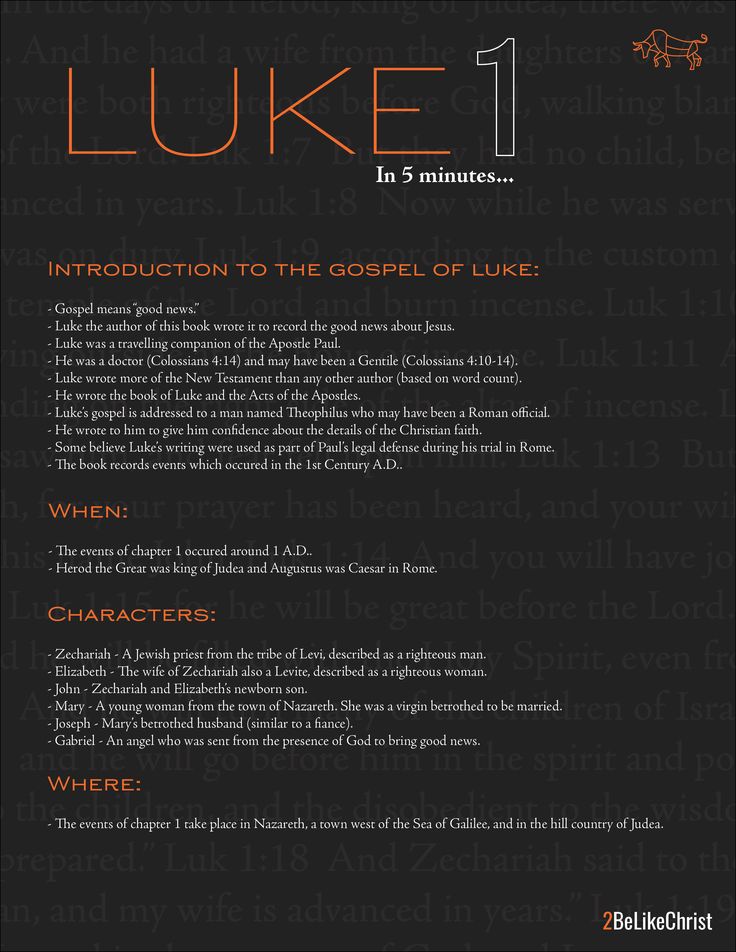
The Gospel of Luke Chapter 1 Summary introduces one of the most hope-filled chapters in the New Testament. It records the miraculous announcement of John the Baptist’s birth, the angel Gabriel’s visit to Mary, Mary’s beautiful song of praise, and Zechariah’s prophetic declaration about God’s plan of salvation. Every event in this chapter reveals God’s perfect timing, unwavering faithfulness, and His promise to send the long-awaited Messiah.
Luke begins his Gospel by explaining that he carefully investigated the events surrounding Jesus’ life so readers could know the certainty of God’s truth. Chapter 1 sets the stage for the entire Gospel by showing that God’s promises, spoken through the prophets centuries earlier, were beginning to come true. Through ordinary people such as Zechariah, Elizabeth, and Mary, God carried out His extraordinary plan to bring salvation to the world.
Whether you are studying the Bible for the first time, preparing a sermon, leading a Bible study, or seeking a deeper understanding of Scripture, this guide will walk you through the chapter in a clear and meaningful way. You’ll discover the historical background, key events, major themes, spiritual lessons, and practical applications that make Luke Chapter 1 one of the most significant chapters in the Bible.
Table of content
Gospel of Luke Chapter 1 Summary
Historical Background of Luke Chapter 1
The Birth of John the Baptist Foretold (Luke 1:5–25)
Spiritual Lessons from the Birth of John the Baptist
Spiritual Lessons from Zechariah’s Prophecy
Life Lessons from Luke Chapter 1
Frequently Asked Questions (FAQs)
Conclusion
Gospel of Luke Chapter 1 Summary
Quick Answer
Luke Chapter 1 tells the story of two miraculous birth announcements. The angel Gabriel first appears to Zechariah to announce the birth of John the Baptist, who would prepare the way for the Messiah. Gabriel later visits Mary to announce that she will give birth to Jesus Christ, the Son of God, through the power of the Holy Spirit. The chapter concludes with the birth of John the Baptist and Zechariah’s prophetic praise, celebrating God’s faithfulness and His unfolding plan of redemption.
These events mark the beginning of the fulfillment of God’s promises to Israel after centuries of prophetic silence. Luke Chapter 1 emphasizes that nothing is impossible with God and that His purposes are accomplished through faith, humility, and obedience.
Historical Background of Luke Chapter 1
Understanding the historical setting of Luke Chapter 1 helps readers appreciate the significance of the events recorded. Before the birth of Jesus Christ, God had been silent through the prophets for about 400 years. During this period, often called the Intertestamental Period, the Jewish people longed for the promised Messiah who would deliver and restore Israel.
Luke, a physician and careful historian, wrote his Gospel after thoroughly investigating eyewitness accounts. His purpose was to provide an orderly and trustworthy record so believers could have confidence in the truth of Jesus Christ. Unlike many ancient writers, Luke paid close attention to historical details, people, and places, making his Gospel both spiritually rich and historically reliable.
Author of the Gospel
The Gospel is traditionally attributed to Luke, a physician and faithful companion of the Apostle Paul. Although Luke was not one of the Twelve Apostles, he carefully researched the events surrounding Jesus’ life by interviewing eyewitnesses and gathering reliable information.
Original Audience
Luke primarily wrote for Theophilus, whose name means “lover of God.” While addressed to one individual, the Gospel was intended to strengthen the faith of all believers, especially Gentile Christians who wanted an accurate account of Jesus’ ministry.
Historical Setting
The events of Luke Chapter 1 take place during the reign of Herod the Great, king of Judea under Roman rule. Although the Roman Empire brought political stability, the Jewish people experienced heavy taxation and longed for freedom and the fulfillment of God’s promises.
Spiritually, many faithful Jews continued to wait expectantly for the coming Messiah foretold by the Old Testament prophets. Luke Chapter 1 marks the moment when God’s long-awaited plan of salvation began to unfold.
Overview of Luke Chapter 1
Luke Chapter 1 contains several remarkable events that prepare readers for the birth and ministry of Jesus Christ.
The chapter opens with Luke explaining why he wrote his Gospel. He assures readers that his account is based on careful research and reliable eyewitness testimony, giving confidence that what follows is historically trustworthy.
The narrative then shifts to the elderly priest Zechariah and his wife Elizabeth, who had remained childless despite their faithful service to God. During Zechariah’s temple ministry, the angel Gabriel announces that they will have a son named John. This child will become John the Baptist, the prophet chosen to prepare people for the coming Messiah. https://versenotes.org/chapter-by-chapter/luke/
Six months later, Gabriel appears again—this time to a young woman named Mary in Nazareth. Gabriel announces that she has found favor with God and will miraculously give birth to Jesus, the Son of the Most High, through the power of the Holy Spirit.
Mary visits her relative Elizabeth, who is also expecting a miraculous child. Filled with the Holy Spirit, Elizabeth joyfully blesses Mary. In response, Mary offers a beautiful hymn of praise known as the Magnificat, celebrating God’s mercy, faithfulness, and power.
The chapter concludes with the birth of John the Baptist. When Zechariah confirms the baby’s name, his speech is restored after months of silence. Filled with the Holy Spirit, he praises God through a prophetic song called the Benedictus, declaring that God’s promised salvation is drawing near.
Together, these events introduce God’s redemptive plan and prepare readers for the arrival of Jesus Christ.
The Birth of John the Baptist Foretold (Luke 1:5–25)
One of the most powerful sections in Luke Chapter 1 is the announcement of John the Baptist’s birth. This story demonstrates that God often works in unexpected ways and fulfills His promises according to His perfect timing.
A Faithful Couple
Zechariah was a priest who faithfully served in the Temple, while Elizabeth came from the priestly family of Aaron. Scripture describes them as righteous people who sought to obey God wholeheartedly.
Despite their faithfulness, they carried the sorrow of being unable to have children. As the years passed, both had grown old, making the possibility of having a child seem impossible from a human perspective.
Yet their circumstances did not prevent God from carrying out His plan.
Gabriel Appears to Zechariah
While Zechariah was offering incense inside the Temple, the angel Gabriel appeared beside the altar.
Gabriel delivered extraordinary news:
- Elizabeth would give birth to a son.
- His name would be John.
- He would bring joy to many people.
- He would be filled with the Holy Spirit from birth.
- He would prepare the people for the coming Messiah.
- He would minister in the spirit and power of Elijah.
This announcement fulfilled Old Testament prophecies that a messenger would prepare the way for the Lord.
Zechariah’s Doubt
Instead of immediately believing the message, Zechariah questioned how such a miracle could happen because both he and Elizabeth were advanced in age.
Because of his unbelief, Gabriel declared that Zechariah would be unable to speak until the child was born. His temporary silence became both a sign of God’s power and a reminder that God’s promises do not depend on human understanding.
Elizabeth’s Joy
Soon afterward, Elizabeth became pregnant exactly as Gabriel had promised.
She praised God for removing her disgrace and recognized His kindness toward her. Her miraculous pregnancy became further evidence that nothing is impossible for God.
Spiritual Lessons from the Birth of John the Baptist
1. God Keeps Every Promise
Even after centuries of waiting, God remained faithful to every promise He had made through the prophets. His timing is always perfect, even when people cannot see His plan.
2. God Uses Ordinary People
Zechariah and Elizabeth were not famous or powerful. They were faithful servants who trusted God, and He chose them to play a crucial role in the story of salvation.
3. Faith Is Greater Than Fear
Zechariah’s initial doubt reminds believers that God’s plans often exceed human understanding. Faith means trusting God’s Word even when circumstances appear impossible.
4. God’s Timing Is Perfect
Years of unanswered prayers did not mean God had forgotten Zechariah and Elizabeth. At exactly the right moment, He answered in a way far greater than they could have imagined.
5. Every Life Has a Divine Purpose
Before John was even born, God had already prepared a mission for him—to point people toward Jesus Christ. This reminds believers that God has a purpose for every life.
Key Takeaways
- Luke begins with historically reliable eyewitness testimony.
- God ends centuries of prophetic silence through the angel Gabriel.
- John the Baptist’s birth is announced as part of God’s plan of redemption.
- Zechariah’s temporary silence teaches the importance of trusting God’s promises.
- Elizabeth’s miraculous pregnancy demonstrates that God specializes in the impossible.
- John is chosen to prepare hearts for the coming of Jesus Christ.
- Luke Chapter 1 reveals God’s faithfulness, mercy, and perfect timing from the very beginning.
Gabriel Appears to Mary (Luke 1:26–38)
One of the most remarkable moments in the Bible takes place when the angel Gabriel visits a young woman named Mary in the town of Nazareth. This announcement, often called the Annunciation, reveals God’s plan to bring salvation into the world through Jesus Christ.
Unlike Zechariah, who was serving in the Temple when Gabriel appeared, Mary was living an ordinary life. Yet God chose her to fulfill an extraordinary purpose. Her story reminds believers that God often works through humble and willing hearts.
Gabriel’s Greeting
Six months after announcing John the Baptist’s birth, Gabriel was sent by God to Mary. He greeted her with words that reflected God’s favor and presence:
“Greetings, you who are highly favored! The Lord is with you.”
Mary was deeply troubled by this unexpected greeting. She wondered why the angel addressed her in such an honorable way. Gabriel reassured her, saying she had found favor with God and should not be afraid.
The Promise of Jesus’ Birth
Gabriel then revealed God’s incredible plan:
- Mary would conceive and give birth to a son.
- His name would be Jesus.
- He would be called the Son of the Most High.
- God would give Him the throne of David.
- His kingdom would never end.
This announcement fulfilled many Old Testament prophecies concerning the coming Messiah. Jesus would not only become Israel’s promised King but also the Savior of the entire world.
The Miracle of the Virgin Birth
Mary asked how this could happen since she was a virgin. Gabriel explained that the Holy Spirit would come upon her and that the child would be conceived by God’s power, not through ordinary human means.
This miraculous conception demonstrates that Jesus is both fully God and fully human. His birth was unique, fulfilling Isaiah’s prophecy that a virgin would conceive and bear a son.
To strengthen Mary’s faith, Gabriel told her that Elizabeth—who had been unable to have children—was now six months pregnant. He concluded with one of Scripture’s most encouraging truths:
“For nothing will be impossible with God.”
Mary’s Faithful Response
Rather than resisting God’s plan, Mary responded with remarkable humility and trust:
“I am the Lord’s servant. May your word to me be fulfilled.”
Her willingness to obey, despite the uncertainty and challenges ahead, makes her an inspiring example of genuine faith.
Spiritual Lessons from Gabriel’s Visit to Mary
1. God Chooses the Humble
Mary was not wealthy, influential, or famous. God chose her because of her humble heart and willingness to serve Him.
2. God’s Plans Are Greater Than Human Understanding
The virgin birth was beyond human explanation, yet it demonstrated God’s limitless power. Believers can trust God even when His plans seem impossible.
3. Obedience Requires Faith
Mary did not know everything that would happen, but she trusted God’s Word completely. True faith often means saying “yes” before knowing every detail.
4. God’s Promises Never Fail
Every promise Gabriel announced pointed to God’s faithfulness in fulfilling His covenant with Israel and His plan of salvation for humanity.
Mary’s Visit to Elizabeth (Luke 1:39–56)
After receiving Gabriel’s message, Mary traveled to the hill country of Judea to visit her relative Elizabeth. This meeting became one of the most joyful and faith-filled encounters recorded in Scripture.
As soon as Elizabeth heard Mary’s greeting, the baby in her womb—John the Baptist—leaped for joy. Filled with the Holy Spirit, Elizabeth recognized that Mary was carrying the promised Messiah.
Elizabeth’s Blessing
Elizabeth praised Mary, saying she was blessed among women because she believed God’s promise would be fulfilled.
She declared:
- Mary was honored to become the mother of the Lord.
- The unborn John recognized Jesus even before birth.
- God’s promises are always trustworthy.
- Faith brings blessing.
Elizabeth’s words confirmed that God’s salvation plan was unfolding exactly as He had promised.
Mary’s Song (The Magnificat)
In response to Elizabeth’s blessing, Mary offered a beautiful hymn of praise known as the Magnificat. This song reflects deep gratitude, humility, and confidence in God’s faithfulness.
Mary glorified God because He had:
- Looked upon His humble servant.
- Done great things for His people.
- Shown mercy to those who fear Him.
- Demonstrated His mighty power.
- Lifted up the humble.
- Filled the hungry with good things.
- Remembered His promises to Abraham and Israel.
The Magnificat is more than a personal expression of joy. It celebrates God’s justice, mercy, and unwavering faithfulness throughout history.
Meaning of the Magnificat
Mary’s song teaches that God values humility over pride and faith over status. It reminds believers that God keeps His promises across generations and works through ordinary people to accomplish extraordinary purposes.
The Magnificat also points forward to Jesus’ ministry, where He would bring hope to the poor, comfort to the brokenhearted, and salvation to all who trust in Him.
Spiritual Lessons from Mary’s Visit to Elizabeth
1. Faith Encourages Others
Mary and Elizabeth strengthened one another simply by sharing what God was doing in their lives. Christian fellowship grows stronger when believers celebrate God’s faithfulness together.
2. God Always Keeps His Word
Both miraculous pregnancies fulfilled God’s promises. What seemed impossible became reality through His power.
3. Humility Leads to Greater Blessing
Mary never focused on her own importance. Instead, she gave all glory to God. Her humility became an example for every believer.
4. Worship Should Be Our Response
Mary responded to God’s goodness with praise rather than fear. Worship remains the natural response to God’s grace and faithfulness.
5. Joy Comes from God’s Presence
John the Baptist’s joyful response in Elizabeth’s womb reminds readers that true joy is found in the presence of Jesus Christ.
Key Takeaways
- Gabriel announced the miraculous birth of Jesus Christ.
- Jesus would be the promised Messiah and eternal King.
- The virgin birth fulfilled Old Testament prophecy.
- Mary’s humble obedience demonstrated extraordinary faith.
- Elizabeth confirmed God’s promises through the Holy Spirit.
- The Magnificat celebrates God’s mercy, justice, and faithfulness.
- Luke Chapter 1 emphasizes that God accomplishes His purposes through humble and willing servants.
The Birth of John the Baptist (Luke 1:57–66)
The final section of Luke Chapter 1 records the joyful birth of John the Baptist. God fulfilled every promise He had spoken through the angel Gabriel, proving once again that His Word never fails. What seemed impossible because of Zechariah and Elizabeth’s old age became a powerful testimony of God’s faithfulness.
John’s birth was not just a personal blessing for his parents. It marked the beginning of a new chapter in God’s redemptive plan. The one chosen to prepare the way for the Messiah had finally arrived.
Elizabeth Gives Birth
When the time came, Elizabeth gave birth to a healthy son. Friends, relatives, and neighbors rejoiced with her because they saw how greatly God had shown His mercy.
Her story reminds believers that God often turns seasons of disappointment into testimonies of His grace. Years of waiting ended with overwhelming joy, and the entire community celebrated God’s goodness.
The Naming of John
According to Jewish custom, the child was to be circumcised on the eighth day. Family members assumed the baby would be named after his father, Zechariah.
However, Elizabeth firmly declared,
“His name is John.”
The relatives questioned her decision because no one in their family carried that name. They then asked the still-silent Zechariah for confirmation.
Unable to speak, Zechariah wrote on a tablet,
“His name is John.”
By choosing the name God had commanded through Gabriel, Zechariah demonstrated complete obedience.
Zechariah’s Voice Is Restored
The moment Zechariah confirmed the child’s name, his speech returned instantly.
Instead of speaking about his own experience, his first words were praises to God. Months of silence had taught him to trust God’s promises completely.
Everyone who witnessed this miracle recognized that God was doing something extraordinary. News spread throughout the hill country of Judea, and many wondered,
“What then is this child going to be?”
They realized that God’s hand was clearly upon John’s life.
Spiritual Lessons from John the Baptist’s Birth
God Always Keeps His Promises
Every detail Gabriel announced months earlier came true exactly as God had said. His promises never fail, regardless of how impossible circumstances may appear.
Obedience Brings Blessing
Zechariah’s obedience demonstrated genuine faith. Once he trusted God’s Word, his discipline ended, and he experienced the joy of God’s blessing.
God Uses Waiting to Strengthen Faith
The months of silence were not wasted. They prepared Zechariah to become a stronger witness to God’s faithfulness.
Every Child Has God-Given Purpose
John was born with a unique mission—to prepare people’s hearts for Jesus Christ. His life reminds believers that every person is created with divine purpose.
Zechariah’s Prophecy (Luke 1:67–80)
After his speech was restored, Zechariah was filled with the Holy Spirit and spoke a prophetic hymn known as the Benedictus, named after its opening word in Latin meaning “Blessed.”
This prophecy celebrates God’s faithfulness and looks ahead to both the ministry of John the Baptist and the coming of Jesus Christ.
Unlike many Old Testament prophecies that anticipated the Messiah from a distance, Zechariah declared that God’s salvation was now unfolding before their eyes.
Praise for God’s Salvation
Zechariah began by praising God for remembering His covenant with Israel.
He proclaimed that God had:
- Visited His people.
- Raised up a mighty Savior.
- Fulfilled the promises spoken through the prophets.
- Remembered His covenant with Abraham.
- Offered salvation from sin and spiritual darkness.
These declarations emphasized that Jesus’ coming was not an unexpected event but the fulfillment of God’s eternal plan.
John’s Mission
Zechariah then turned his attention to his newborn son.
He declared that John would:
- Be called a prophet of the Most High.
- Prepare the way for the Lord.
- Teach people about salvation.
- Call sinners to repentance.
- Point everyone toward Jesus Christ.
John would become the bridge between the Old Testament prophets and the ministry of Christ.
The Light of the World
Zechariah concluded by describing Jesus as the light who would shine on those living in darkness and guide people into the path of peace.
This beautiful image points to Jesus as the true source of hope, forgiveness, and eternal life.
Spiritual Lessons from Zechariah’s Prophecy
God’s Plan Is Perfect
Every promise spoken centuries earlier was being fulfilled according to God’s perfect timetable.
Salvation Is God’s Greatest Gift
The prophecy focuses on spiritual salvation rather than political freedom. Jesus came to rescue humanity from sin and restore people to God.
Jesus Is the Light of the World
Without Christ, humanity remains in spiritual darkness. Through Him, believers receive truth, hope, and eternal life.
God’s Mercy Never Ends
Zechariah repeatedly praised God’s compassion and faithfulness. His mercy reaches every generation that trusts Him.
Major Themes in Luke Chapter 1
Luke Chapter 1 contains several important themes that shape the entire Gospel.
God’s Faithfulness
God fulfilled His promises despite centuries of waiting. Every prophecy moved closer to fulfillment through the births of John the Baptist and Jesus Christ.
Fulfilled Prophecy
Events throughout the chapter confirm that God’s Word is trustworthy. What the prophets announced long ago was becoming reality.
Faith and Trust
Mary believed God’s message immediately, while Zechariah learned the importance of trusting God completely. Their experiences encourage believers to place confidence in God’s promises.
Humility
God chose ordinary people—Mary, Elizabeth, and Zechariah—to accomplish extraordinary purposes. His kingdom values humble hearts rather than worldly status.
Obedience
Both Mary and Zechariah ultimately obeyed God’s instructions, showing that obedience opens the door to experiencing God’s blessings.
Joy
Joy fills the entire chapter—from Elizabeth’s celebration to Mary’s song and Zechariah’s praise. God’s presence always brings lasting joy.
The Holy Spirit
The Holy Spirit actively empowers and guides God’s people throughout Luke Chapter 1, preparing the way for Christ’s ministry.
Salvation
Everything in Luke Chapter 1 points toward God’s ultimate plan of salvation through Jesus Christ.
Key Characters in Luke Chapter 1
Luke
The careful historian who wrote an orderly and trustworthy account of Jesus’ life based on eyewitness testimony.
Zechariah
A faithful priest who learned to trust God’s promises and became the father of John the Baptist.
Elizabeth
A righteous woman whose miraculous pregnancy demonstrated God’s power and mercy.
Mary
A humble young woman chosen to become the mother of Jesus because of her faith and obedience.
Angel Gabriel
God’s messenger who announced the births of both John the Baptist and Jesus Christ.
John the Baptist
The prophet appointed to prepare people’s hearts for the coming Messiah.
Jesus Christ
The promised Son of God, eternal King, and Savior whose birth fulfills God’s redemptive plan.
Joseph
Although mentioned only briefly in this chapter, Joseph is introduced as Mary’s betrothed and a descendant of King David, highlighting Jesus’ royal lineage.
Important Bible Verses in Luke Chapter 1
Luke Chapter 1 contains many memorable verses that reveal God’s faithfulness, power, and plan of salvation. Here are some of the chapter’s most significant passages, along with their meaning.
1. Luke 1:3–4
Luke explains that he carefully investigated everything before writing his Gospel so readers could know the certainty of what they had been taught.
Key Lesson: Christianity is rooted in trustworthy eyewitness testimony and careful historical investigation.
2. Luke 1:13
Gabriel tells Zechariah not to fear because his prayer has been heard and Elizabeth will bear a son named John.
Key Lesson: God hears the prayers of His people, even when the answer seems delayed.
3. Luke 1:17
John the Baptist is chosen to prepare the way for the Lord by turning people’s hearts back to God.
Key Lesson: God prepares hearts before accomplishing His greater purposes.
4. Luke 1:28
Gabriel greets Mary as one who has found favor with God.
Key Lesson: God’s grace is given according to His purpose, and He often chooses humble people to accomplish extraordinary tasks.
5. Luke 1:31–33
Gabriel announces that Mary will give birth to Jesus, whose kingdom will never end.
Key Lesson: Jesus is the promised Messiah and eternal King foretold in the Old Testament.
6. Luke 1:37
Gabriel reminds Mary that nothing is impossible with God.
Key Lesson: God’s power is unlimited, and no situation is beyond His ability to transform.
7. Luke 1:38
Mary responds with humble obedience, accepting God’s will for her life.
Key Lesson: A willing heart allows God to work in extraordinary ways.
8. Luke 1:45
Elizabeth blesses Mary because she believed that God’s promises would be fulfilled.
Key Lesson: Faith brings confidence in God’s unfailing Word.
9. Luke 1:46–49
Mary’s song magnifies the Lord for His mercy, power, and faithfulness.
Key Lesson: Worship naturally flows from a grateful heart that recognizes God’s goodness.
10. Luke 1:68–79
Zechariah praises God for sending salvation through the coming Messiah and declares John’s mission to prepare His way.
Key Lesson: God’s plan of redemption fulfills His promises and brings light to a world in spiritual darkness.
Life Lessons from Luke Chapter 1
Luke Chapter 1 is not only a historical account but also a source of timeless spiritual wisdom. Its lessons remain relevant for believers today.
Trust God’s Perfect Timing
Zechariah and Elizabeth waited many years before their prayer was answered. Their story reminds us that God’s timing is always wiser than our own.
Believe God’s Promises
Mary accepted God’s message with faith, even though she did not understand every detail. Her example encourages believers to trust God’s Word completely.
Stay Faithful During Seasons of Waiting
Faithfulness is often developed through patience. God may use waiting periods to prepare us for greater blessings and responsibilities.
Live with Humility
Mary never sought recognition for herself. Instead, she gave all glory to God. Humility opens our hearts to God’s purposes.
Worship with Gratitude
Both Mary and Zechariah responded to God’s work through songs of praise. Worship should be the natural response to God’s grace and faithfulness.
Prepare Others to Meet Christ
John the Baptist dedicated his life to pointing people toward Jesus. Christians today are also called to share the hope of the Gospel with others.
Trust God’s Power Over Human Limitations
Luke Chapter 1 shows that God works beyond natural circumstances. Whether through Elizabeth’s pregnancy or the virgin birth, He demonstrates that nothing is impossible for Him.
Why Luke Chapter 1 Is Important Today
Although written nearly two thousand years ago, Luke Chapter 1 continues to inspire and encourage believers around the world.
It reminds us that:
- God always fulfills His promises.
- Faith is stronger than fear.
- God’s grace reaches ordinary people.
- Prayer is never wasted.
- Waiting seasons often prepare us for God’s greater plan.
- Jesus Christ is the promised Savior for all people.
- God’s mercy extends from generation to generation.
- Hope is found in Christ, even during uncertain times.
For Christians today, Luke Chapter 1 serves as a powerful reminder that God remains faithful, active, and sovereign in every season of life.
Frequently Asked Questions (FAQs)
1. What is the main message of Luke Chapter 1?
The main message of Luke Chapter 1 is that God faithfully fulfills His promises. Through the miraculous announcements of John the Baptist’s and Jesus’ births, the chapter reveals God’s plan of salvation unfolding according to His perfect timing.
2. Why is Luke Chapter 1 important?
Luke Chapter 1 introduces the events leading to Jesus Christ’s birth and demonstrates how Old Testament prophecies began to be fulfilled through God’s sovereign plan.
3. Who are the main characters in Luke Chapter 1?
The chapter focuses on Luke, Zechariah, Elizabeth, Mary, Angel Gabriel, John the Baptist, Joseph, and Jesus Christ.
4. Why did Gabriel appear to Mary?
Gabriel announced that Mary had been chosen by God to give birth to Jesus Christ through the power of the Holy Spirit, fulfilling the prophecy of the promised Messiah.
5. What is the significance of John the Baptist?
John the Baptist was chosen to prepare people’s hearts for Jesus Christ by calling them to repentance and pointing them toward the coming Savior.
6. What does Mary’s Song (Magnificat) teach us?
The Magnificat celebrates God’s mercy, faithfulness, justice, and compassion. It encourages believers to praise God with humility and gratitude.
7. What can Christians learn from Zechariah?
Zechariah teaches that even moments of doubt can become opportunities for spiritual growth. God’s faithfulness remains constant, and obedience leads to blessing.
8. What does Luke 1:37 mean?
Luke 1:37 reminds believers that no situation is beyond God’s power. His promises can be trusted because nothing is impossible for Him.
9. Why was Elizabeth’s pregnancy considered miraculous?
Elizabeth was advanced in age and had been unable to have children. Her pregnancy demonstrated God’s supernatural power and fulfilled His promise through Gabriel.
10. How does Luke Chapter 1 point to Jesus?
Every major event in the chapter prepares readers for Jesus’ arrival. John’s birth announces the coming Messiah, while Gabriel’s message to Mary reveals Jesus as the Son of God and the Savior of the world.
Conclusion
The Gospel of Luke Chapter 1 Summary reveals the beginning of God’s extraordinary plan to redeem humanity through Jesus Christ. From the miraculous announcement of John the Baptist’s birth to Gabriel’s visit to Mary, every event demonstrates God’s faithfulness, mercy, and perfect timing.
The chapter highlights ordinary individuals who trusted God despite uncertainty. Zechariah learned to rely on God’s promises, Elizabeth experienced His miraculous provision, and Mary responded with humble obedience. Together, their stories remind us that God often accomplishes His greatest work through hearts that are willing to trust Him.
Luke Chapter 1 also lays the foundation for the entire Gospel by introducing Jesus as the long-awaited Messiah whose coming fulfills centuries of prophecy. Its message continues to encourage believers today to trust God’s timing, remain faithful during seasons of waiting, and respond to His grace with worship and obedience.
As you continue reading the Gospel of Luke, you’ll discover how God’s promises unfold through the life, ministry, death, and resurrection of Jesus Christ—the Savior who brings hope, forgiveness, and eternal life to all who believe.
Must read this:Biblical Christmas Trivia: 100 Bible Questions:
