
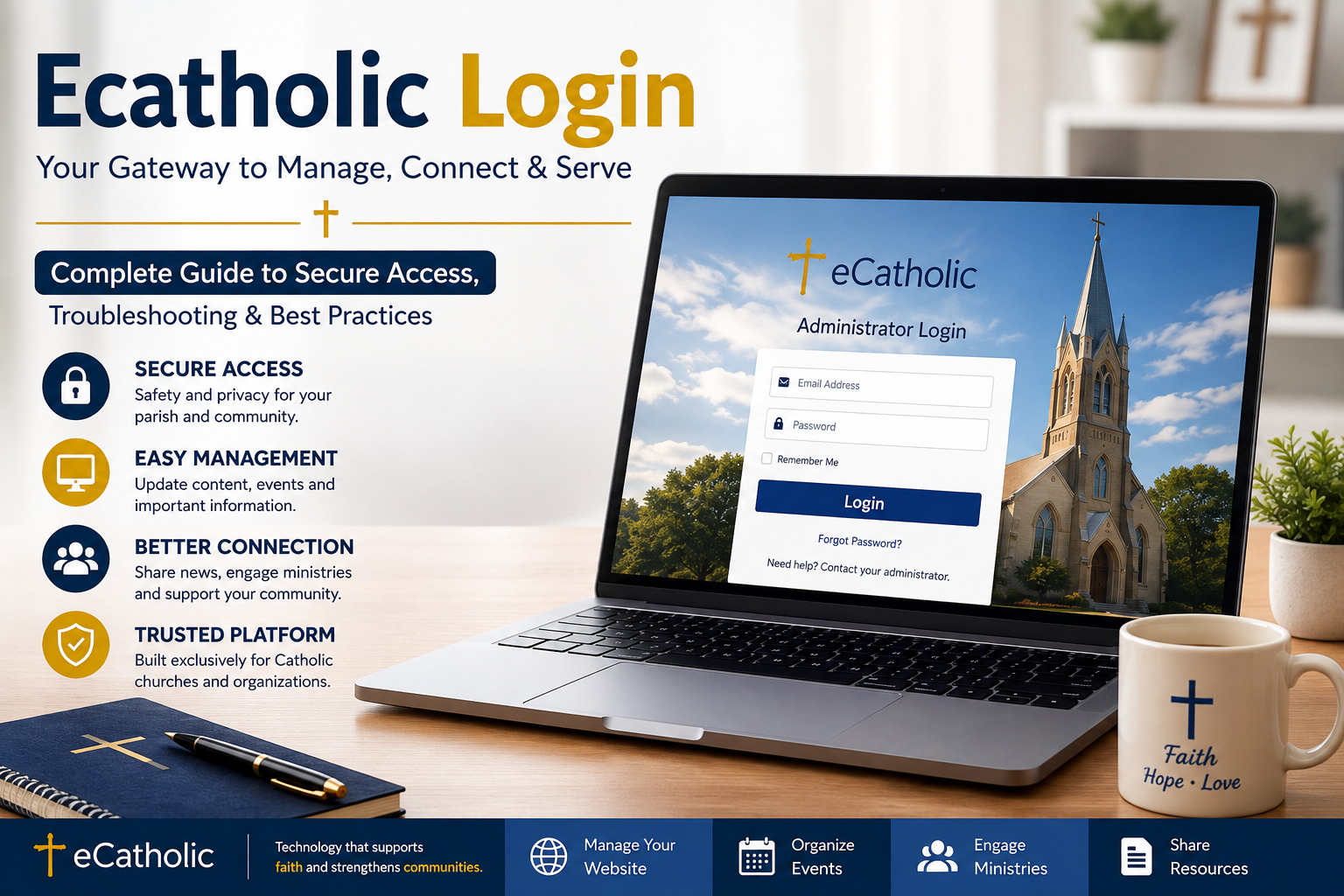
Ecatholic Login
Introduction
If you’re looking for Ecatholic Login, you’ve come to the right place. Whether you’re a parish administrator, website editor, ministry leader, or volunteer managing your church’s online presence, understanding how to log in securely and use the platform efficiently is essential.
eCatholic is one of the most trusted website and communication platforms designed specifically for Catholic churches, schools, dioceses, and ministries. Its intuitive dashboard allows authorized users to update parish information, publish announcements, manage events, upload sermons, and keep the community informed—all from a single, secure location.https://saintmarysdubai.org/
In this comprehensive guide, you’ll learn everything about Ecatholic Login, including how to sign in, recover your password, solve common login problems, improve account security, and follow best practices for managing your church website.
Table of Contents
- What Is Ecatholic Login?
- Understanding the eCatholic Platform
- Who Can Access an eCatholic Account?
- Benefits of Using eCatholic Login
- Features Available After Login
- Common Login Requirements
- Frequently Asked Questions
- Final Thoughts
What Is Ecatholic Login?
Ecatholic Login is the secure authentication system that allows authorized users to access the administrative dashboard of an eCatholic website. After signing in with the correct email address and password, users can manage website content, publish updates, edit pages, organize events, and perform administrative tasks.
Unlike traditional website builders that are created for general businesses, eCatholic is specifically designed for Catholic organizations. Its tools focus on helping churches strengthen communication, improve digital ministry, and provide a better online experience for parishioners.
Every login is protected through secure authentication measures, ensuring that only approved users can access sensitive website information.
Understanding the eCatholic Platform
eCatholic is more than just a website builder. It is a complete digital ecosystem that helps Catholic organizations manage their online presence efficiently.
The platform combines several essential tools into one centralized dashboard, making daily website management simple—even for users with little technical experience.
Some of its core capabilities include:
- Website content management
- Parish news publishing
- Online event calendars
- Ministry information pages
- Mass schedules
- Staff directories
- Online forms
- Digital communication tools
- Media galleries
- Resource sharing
Because everything is managed from a single dashboard, administrators can keep their websites updated without relying on complex coding or expensive developers.
Who Can Access an Ecatholic Login?
Not everyone can create an account independently. Access is typically granted by a parish or diocesan administrator.
Authorized users may include:
- Parish administrators
- Church office staff
- Website managers
- Priests
- Deacons
- Ministry coordinators
- School administrators
- Communications teams
- Volunteers with editing permissions
- Diocese staff members
Each user receives permissions based on their role. For example, some users may only publish blog posts, while others can manage the entire website.
This role-based access improves security and prevents accidental changes to important website content.
Why Ecatholic Login Is Important
A secure login system protects your church’s website from unauthorized access while making website management efficient and organized.
Here are some of the biggest advantages:
Secure Website Management
Only approved users can access administrative tools, reducing the risk of unauthorized edits or security issues.
Faster Content Updates
Church announcements, Mass schedules, and ministry events can be updated within minutes.
Better Communication
Keeping information current helps parishioners stay informed about upcoming services, community events, volunteer opportunities, and important announcements.
Centralized Administration
Instead of using multiple platforms, administrators can manage website content, media, forms, and communications from one dashboard.
Improved Collaboration
Multiple authorized users can work together while maintaining separate permission levels, making teamwork more efficient and secure.
Key Features Available After Ecatholic Login
After successfully signing in, users gain access to a variety of powerful tools that simplify website management.
Website Content Editor
Create new pages, edit existing content, update parish information, and publish announcements using an easy-to-use editor.
Event Management
Add parish events, religious celebrations, retreats, youth programs, and community gatherings with detailed schedules.
Media Library
Upload and organize:
- Photos
- Church banners
- Videos
- Bulletins
- PDFs
- Documents
- Ministry resources
Staff Directory Management
Keep contact information for priests, parish staff, ministry leaders, and office personnel accurate and up to date.
Forms and Registrations
Create online forms for:
- Volunteer registration
- Religious education
- Event sign-ups
- Contact requests
- Prayer intentions
- Community outreach
User Permissions
Administrators can assign different access levels, ensuring each team member only sees the tools needed for their responsibilities.
Common Requirements Before Logging In
Before accessing your account, make sure you have:
- Your registered email address
- Your password
- A stable internet connection
- Permission from your parish administrator
- A supported web browser
- Access to your email for password recovery if needed
Keeping this information ready helps ensure a smooth and secure login experience.
Why Churches Choose eCatholic
Thousands of Catholic organizations rely on eCatholic because it is designed specifically for the needs of parishes and dioceses. Instead of adapting a generic website builder, churches receive a platform tailored for ministry, communication, and community engagement.
Some of the reasons organizations choose eCatholic include:
- User-friendly interface
- Secure login system
- Reliable cloud-based platform
- Easy website maintenance
- Built-in church-focused features
- Professional website design
- Strong security practices
- Efficient collaboration among staff members
These advantages allow church leaders to spend less time managing technology and more time serving their communities.
How to Access Ecatholic Login, Reset Your Password & Solve Common Login Problems
In Part 1, we explored what Ecatholic Login is, who can access it, and why it plays a vital role in managing Catholic church websites. In this section, you’ll learn how to sign in correctly, recover a forgotten password, troubleshoot common login issues, and keep your account secure.
How to Log In to Your Ecatholic Account
Accessing your eCatholic dashboard is simple when you have the correct credentials. Follow these steps to sign in safely.
Step 1: Open the Login Page
Navigate to your parish’s eCatholic login page or the login portal provided by your church administrator.
Always verify that you are using the official login page to protect your account from phishing attempts.
Step 2: Enter Your Email Address
Use the email address that was registered when your account was created.
Before continuing, make sure:
- The email is spelled correctly.
- There are no extra spaces.
- You are using the same email assigned by your parish administrator.
A small typing error can prevent you from accessing your account.
Step 3: Enter Your Password
Type your password carefully.
Remember that passwords are case-sensitive, meaning uppercase and lowercase letters must be entered exactly as they were created.
If you’re using a shared computer, avoid saving your password in the browser.
Step 4: Click the Login Button
Once your email and password are entered correctly, click the Log In button.
If your credentials are correct, you’ll be redirected to the eCatholic dashboard, where you can manage website content, announcements, events, media, and other administrative tools.
What You’ll See After Logging In
After a successful login, your dashboard may include features such as:
- Website page editor
- News and announcement manager
- Event calendar
- Media library
- Online forms
- User management
- Parish directories
- Document uploads
- Website analytics
- Content publishing tools
The exact features available depend on the permissions assigned to your account.
How to Reset Your Ecatholic Password
Forgetting a password is common, and eCatholic provides a straightforward recovery process.
Step 1: Select “Forgot Password”
On the login page, click the Forgot Password option.
Step 2: Enter Your Registered Email
Provide the email address linked to your account.
Be sure it’s the same email used during account registration.
Step 3: Check Your Inbox
You’ll receive a password reset email containing a secure link.
If you don’t see it:
- Check your Spam folder.
- Check your Promotions folder.
- Wait a few minutes and try again.
Step 4: Create a New Password
Choose a strong password that includes:
- Uppercase letters
- Lowercase letters
- Numbers
- Special characters
Avoid using names, birthdays, or simple words that are easy to guess.
Step 5: Log In Again
Return to the login page and sign in using your new password.
Common Ecatholic Login Problems
Even experienced users occasionally encounter login issues. Fortunately, most problems can be resolved quickly.
Incorrect Email Address
One of the most common issues is entering the wrong email.
Double-check for:
- Typing mistakes
- Missing letters
- Extra spaces
- Using a different email account
Incorrect Password
If your password isn’t accepted:
- Check whether Caps Lock is enabled.
- Ensure Num Lock is correct.
- Try entering the password manually instead of copying and pasting.
If necessary, reset your password.
Browser Issues
Older browsers may not work properly with modern web applications.
For the best experience:
- Update your browser regularly.
- Clear your browser cache.
- Delete old cookies.
- Restart your browser before trying again.
Internet Connection Problems
A slow or unstable internet connection can interrupt the login process.
Before troubleshooting further:
- Refresh the page.
- Restart your router if needed.
- Switch to a more stable network.
Account Permission Issues
If your account no longer has access:
- Contact your parish administrator.
- Confirm that your user account is still active.
- Verify that your permissions haven’t changed.
Only authorized administrators can restore account access.
Tips for Creating a Strong Password
A secure password helps protect sensitive church information.
Consider these best practices:
- Use at least 12 characters.
- Combine uppercase and lowercase letters.
- Include numbers and symbols.
- Avoid dictionary words.
- Don’t reuse passwords from other websites.
- Change your password periodically.
Using a password manager can also help you generate and store complex passwords securely.
Safe Login Practices
Protecting your account is just as important as accessing it.
Follow these security habits:
- Never share your password with others.
- Log out after every session, especially on public computers.
- Avoid logging in over unsecured public Wi-Fi.
- Keep your operating system and browser updated.
- Be cautious of emails asking for your login credentials.
These simple precautions significantly reduce the risk of unauthorized access.
Can You Access Ecatholic Login on Mobile Devices?
Yes. eCatholic can be accessed through most modern smartphones and tablets using a compatible web browser.
When using a mobile device:
- Ensure you have a reliable internet connection.
- Use the latest version of your browser.
- Avoid saving passwords on shared devices.
- Log out when you’re finished.
This allows church staff and volunteers to manage updates even while away from the office.
Troubleshooting Checklist
If you’re unable to log in, review this quick checklist:
- ✔ Verify your email address.
- ✔ Confirm your password is correct.
- ✔ Reset your password if necessary.
- ✔ Update your browser.
- ✔ Clear cache and cookies.
- ✔ Check your internet connection.
- ✔ Confirm your account is active.
- ✔ Contact your parish administrator if the issue persists.
Working through these steps resolves the majority of login problems.
Managing Your eCatholic Dashboard, User Roles & Website Best Practices
After successfully completing the Ecatholic Login process, you’ll be taken to your administrative dashboard. This is the control center where authorized users manage website content, publish announcements, update Mass schedules, organize events, and keep parish information current.
Understanding how the dashboard works and following best practices can save time, improve collaboration, and ensure your church website remains accurate, secure, and welcoming for visitors.
Understanding the eCatholic Dashboard
The dashboard is designed to make website management straightforward, even for users without technical experience. Its organized layout allows administrators to find tools quickly and complete everyday tasks efficiently.
Depending on your account permissions, your dashboard may include:
- Website Pages
- News & Announcements
- Event Calendar
- Media Library
- Online Forms
- Staff Directory
- User Management
- Navigation Menu
- File Manager
- Website Settings
Each section serves a specific purpose, helping administrators maintain a professional and up-to-date parish website.
Website Pages
One of the most frequently used features is the page editor.
From here, you can:
- Create new pages
- Edit existing content
- Update parish information
- Add ministry details
- Publish seasonal messages
- Share community resources
Before publishing changes, review your content carefully for spelling, grammar, and formatting to ensure a polished presentation.
Managing News and Announcements
Church members often visit a parish website to stay informed about upcoming activities.
Use the announcements section to publish updates such as:
- Weekend Mass schedules
- Holy Day services
- Parish festivals
- Volunteer opportunities
- Charity events
- Youth ministry programs
- Bible study sessions
- Community outreach initiatives
Keeping announcements current encourages parishioners to engage with church activities.
Managing Events
The event calendar helps organize parish activities in one convenient place.
Common events include:
- Sunday Mass
- Daily Mass
- Confession times
- Prayer meetings
- Retreats
- Choir practice
- Youth gatherings
- Parish council meetings
- Religious education classes
- Holiday celebrations
Include clear dates, times, locations, and descriptions so visitors have all the information they need.
Uploading Photos and Documents
Visual content helps make your parish website more engaging.
You can upload:
- Church photos
- Event galleries
- Weekly bulletins
- PDF newsletters
- Registration forms
- Ministry brochures
- Educational resources
- Annual reports
Organize files into folders with descriptive names to make them easier to locate in the future.
Managing Staff Information
Visitors appreciate knowing who serves the parish.
Keep staff profiles updated with:
- Name
- Position
- Contact information
- Office hours
- Ministry responsibilities
- Professional photograph
Regular updates help parishioners connect with the right individuals when they need assistance.
User Roles and Permissions
Not every user requires full administrative access. eCatholic allows organizations to assign permissions based on responsibilities.
Administrator
Administrators typically have full control over the website.
Responsibilities include:
- Managing users
- Editing all pages
- Updating settings
- Publishing content
- Monitoring website activity
Editor
Editors usually focus on content creation and updates.
They may:
- Write articles
- Publish announcements
- Update ministry pages
- Upload images
- Edit event information
Editors generally cannot modify advanced website settings or manage user accounts.
Contributor
Contributors have more limited access.
They may submit content for review without publishing it directly.
This approval process helps maintain quality and consistency across the website.
Ministry Leaders
Many churches provide limited access to ministry coordinators.
They can update information related to:
- Youth Ministry
- Music Ministry
- Religious Education
- Community Outreach
- Men’s Ministry
- Women’s Ministry
This distributed approach keeps information accurate while reducing the workload on administrators.
Best Practices for Managing Your Church Website
A well-maintained website builds trust and strengthens communication with parishioners.
Update Content Regularly
Review your website frequently to ensure:
- Mass times are accurate.
- Contact details are current.
- Event information is up to date.
- Ministry pages reflect recent activities.
Outdated information can confuse visitors and reduce confidence in your website.
Use Clear, Simple Language
Write content that is easy to understand.
Avoid overly technical language and explain church programs in a welcoming, accessible way for both regular parishioners and first-time visitors.
Keep Navigation Organized
Visitors should be able to find important information within a few clicks.
Organize menus logically with categories such as:
- About Us
- Mass Times
- Sacraments
- Ministries
- Events
- News
- Contact
A clear structure improves user experience and helps search engines understand your site.
Optimize Images
Images enhance your website, but oversized files can slow page loading.
Before uploading:
- Compress images.
- Use descriptive file names.
- Add meaningful alt text.
- Choose high-quality photos.
These practices improve accessibility and contribute to better SEO performance.
Maintain Consistent Branding
Use consistent:
- Colors
- Fonts
- Logos
- Headings
- Writing style
A unified design creates a professional appearance and reinforces your parish’s identity.
Common Mistakes to Avoid
Even experienced website managers can make avoidable errors.
Watch out for these common issues:
- Publishing outdated announcements
- Leaving broken links on pages
- Uploading low-quality images
- Forgetting to proofread content
- Using inconsistent formatting
- Giving unnecessary administrator access
- Neglecting regular content updates
- Removing important pages accidentally
Reviewing your work before publishing helps maintain a professional and reliable website.
Tips for Better Collaboration
Many parish websites are managed by multiple team members.
To work efficiently:
- Define clear responsibilities.
- Establish a content review process.
- Schedule regular website updates.
- Communicate upcoming changes with your team.
- Keep login credentials private and secure.
Effective collaboration ensures the website remains accurate and reflects the life of the parish.
Why Regular Website Maintenance Matters
Your church website is often the first place people visit when learning about your parish.
Regular maintenance helps:
- Improve visitor trust
- Increase engagement
- Share accurate information
- Support parish communication
- Enhance the overall user experience
A well-maintained website serves both current parishioners and newcomers looking for a welcoming faith community.
eCatholic Login Security, Troubleshooting, and Expert Best Practices
Protecting your Ecatholic Login account is just as important as knowing how to access it. Church websites often contain important parish information, staff details, event schedules, and administrative content. Following proper security practices helps keep your website safe while ensuring authorized users can work efficiently.
In this section, we’ll cover advanced security recommendations, solutions to technical issues, and expert tips for maintaining a secure and reliable eCatholic website.
How to Keep Your eCatholic Login Account Secure
Cybersecurity is essential for every organization, including churches. Even a small oversight can expose sensitive information or disrupt your parish website.
Follow these best practices to keep your account secure.
Use a Strong, Unique Password
Create a password that is difficult to guess.
A strong password should include:
- Uppercase letters
- Lowercase letters
- Numbers
- Special characters
- At least 12 characters
Avoid using:
- Your name
- Birthdays
- Church name
- Simple words
- Repeated passwords from other websites
Changing your password periodically adds another layer of protection.
Never Share Your Login Credentials
Each administrator should have their own account.
Avoid:
- Sharing passwords by email
- Writing passwords on paper
- Sending passwords through messaging apps
- Using one account for multiple staff members
Individual accounts improve accountability and make it easier to manage permissions.
Log Out After Every Session
Always sign out after completing your work.
This is especially important when using:
- Public computers
- Shared office computers
- School devices
- Library computers
Logging out prevents unauthorized users from accessing your dashboard.
Keep Your Browser Updated
Modern browsers receive regular security updates.
Using the latest version helps protect against:
- Security vulnerabilities
- Malware attacks
- Compatibility issues
- Performance problems
Enable automatic updates whenever possible.
Be Aware of Phishing Emails
Cybercriminals sometimes send fake emails pretending to be trusted organizations.
Never click suspicious links requesting your login information.
Always verify:
- The sender’s email address
- Website URL
- Message authenticity
If something seems unusual, contact your parish administrator before responding.
Common Technical Problems and Their Solutions
Although eCatholic is designed to be reliable, occasional technical issues can occur.
Here are the most common problems and how to resolve them.
Login Page Won’t Load
Possible causes include:
- Internet connection problems
- Browser issues
- Temporary server maintenance
Try these solutions:
- Refresh the page.
- Restart your browser.
- Clear your browser cache.
- Test another browser.
- Check your internet connection.
Password Reset Email Doesn’t Arrive
If you requested a password reset but didn’t receive an email:
- Check Spam or Junk folders.
- Verify your email address.
- Wait several minutes.
- Submit another password reset request.
If the issue continues, contact your website administrator.
“Invalid Email or Password” Message
This error usually occurs because of:
- Typing mistakes
- Incorrect email address
- Incorrect password
- Expired credentials
Double-check your information before trying again.
Browser Compatibility Issues
For the best experience, use an updated browser such as:
- Google Chrome
- Mozilla Firefox
- Microsoft Edge
- Safari
Older browsers may not fully support modern website features.
Permission Denied
If you successfully log in but cannot edit certain pages, your account permissions may be limited.
Contact your parish administrator if additional access is required.
Best Practices for Church Website Management
A secure login is only one part of maintaining an effective parish website.
The following habits help ensure your website remains useful, accurate, and welcoming.
Review Content Regularly
Schedule routine reviews to update:
- Mass schedules
- Staff information
- Ministry contacts
- Event calendars
- Parish announcements
- Office hours
Current information improves visitor confidence.
Keep Media Organized
Create folders for:
- Bulletins
- Event photos
- Ministry images
- Documents
- Videos
Organized media saves time and improves workflow.
Remove Outdated Content
Old announcements and expired events can confuse visitors.
Regularly archive or delete:
- Past events
- Old newsletters
- Expired registrations
- Outdated announcements
A clean website is easier to navigate.
Check Links Frequently
Broken links create a poor user experience.
Periodically verify that:
- Contact forms work correctly.
- Internal pages open properly.
- Downloadable files are available.
- External resources remain active.
Encourage Team Collaboration
If multiple people manage the website:
- Define responsibilities clearly.
- Use appropriate permission levels.
- Review important updates before publishing.
- Maintain consistent formatting across pages.
Collaboration helps maintain quality while reducing errors.
Why Website Security Matters for Churches
Church websites often serve as the primary source of information for parishioners and visitors.
A secure website helps:
- Protect sensitive information.
- Prevent unauthorized changes.
- Build trust within the community.
- Maintain uninterrupted access to important resources.
- Support effective online ministry.
Strong security practices demonstrate responsible stewardship of your parish’s digital presence.
Quick Tips for New Administrators
If you’re new to eCatholic, these recommendations can help you get started confidently.
- Explore the dashboard before making changes.
- Learn the permission levels assigned to your account.
- Keep your login credentials private.
- Update website content regularly.
- Back up important files when possible.
- Ask experienced administrators for guidance.
- Review published pages for accuracy before sharing them.
Developing these habits early makes website management much easier over time.
Common Mistakes to Avoid
Avoiding these common errors can improve both security and website performance.
- Using weak passwords
- Sharing one account among multiple users
- Ignoring software updates
- Forgetting to log out
- Publishing content without proofreading
- Leaving outdated announcements online
- Uploading oversized images
- Giving administrator access to unnecessary users
Preventing these mistakes helps maintain a secure and professional website.
Preparing for the Future
As digital communication continues to evolve, parish websites play an increasingly important role in serving faith communities.
By following secure login practices, maintaining accurate content, and working collaboratively, churches can provide a reliable online experience that supports parishioners, visitors, and ministry leaders alike.
A well-managed eCatholic website reflects the mission of the parish while making important information accessible to everyone.
As we’ve explored throughout this guide, Ecatholic Login is the secure gateway to managing a parish’s online presence. Whether you’re updating Mass schedules, publishing announcements, organizing events, or maintaining ministry pages, using the platform effectively helps your church communicate clearly with parishioners and visitors.
This final section answers common questions, summarizes the key takeaways, and provides additional SEO recommendations for your website.
Frequently Asked Questions (FAQs)
1. What is Ecatholic Login?
Ecatholic Login is the secure sign-in system that allows authorized users to access the eCatholic administrative dashboard. From there, they can manage website content, update pages, publish announcements, and maintain other parish resources.
2. Who can use an Ecatholic Login account?
Only users who have been granted access by their parish, school, or diocesan administrator can log in. Common users include parish staff, priests, ministry leaders, website editors, and communication teams.
3. How do I reset my Ecatholic password?
If you’ve forgotten your password, select the Forgot Password option on the login page, enter your registered email address, and follow the instructions in the password reset email.
4. Why can’t I log in to my account?
Common reasons include:
- Incorrect email address
- Incorrect password
- Browser cache issues
- Internet connection problems
- Inactive account
- Insufficient permissions
Checking these items usually resolves most login problems.
5. Is Ecatholic Login secure?
Yes. eCatholic uses secure authentication to protect user accounts. You can further improve security by using a strong password, keeping your browser updated, and never sharing your login credentials.
6. Can multiple users manage one parish website?
Yes. eCatholic supports multiple user accounts with different permission levels, allowing administrators, editors, and contributors to work together while maintaining appropriate access controls.
7. Can I access eCatholic on my phone or tablet?
Yes. You can access your account using a modern web browser on most smartphones and tablets. A stable internet connection and an up-to-date browser are recommended for the best experience.
8. What should I do if my account is locked?
If your account becomes locked or you continue experiencing login issues after resetting your password, contact your parish or diocesan administrator for assistance.
9. How often should I update my church website?
Review your website regularly and update it whenever information changes. Weekly checks are a good practice to ensure Mass schedules, events, contact details, and announcements remain accurate.
10. What makes eCatholic different from a general website builder?
Unlike general website platforms, eCatholic is designed specifically for Catholic churches, schools, and dioceses. It includes features that support parish communication, ministry management, event organization, and community engagement.
Best Practices for Long-Term Website Success
Maintaining a high-quality parish website requires ongoing attention. Consider these best practices:
- Review website content on a regular schedule.
- Update Mass times and event calendars promptly.
- Keep staff and ministry information current.
- Optimize images for faster page loading.
- Remove outdated announcements and expired events.
- Test contact forms and downloadable files.
- Proofread all new content before publishing.
- Train new editors on security and publishing standards.
Consistent maintenance helps create a positive experience for visitors and supports your parish’s mission online.
Conclusion
Ecatholic Login is much more than a simple sign-in page—it’s the starting point for managing a parish’s digital ministry. With the right permissions, administrators and editors can update website content, publish announcements, organize events, and communicate effectively with their faith community.
By following the best practices outlined in this guide—using strong passwords, maintaining accurate content, assigning appropriate user roles, and reviewing your website regularly—you can create a secure, professional, and welcoming online presence for your parish.
Whether you’re a first-time website editor or an experienced administrator, understanding how Ecatholic Login works will help you manage your church website with confidence, improve collaboration among staff, and provide parishioners with reliable information whenever they need it.
Must read this: https://blessoralife.com/wp-admin/admin.php?page=rank-math-links-page#links?source_id=860&link_type=internal
